
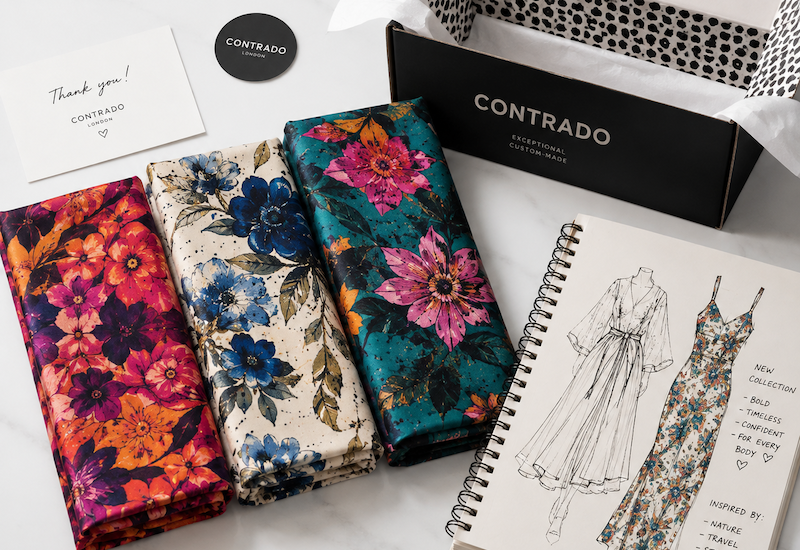
In the ever-evolving world of fashion, innovation and responsiveness are key. New designers often face the daunting challenge of turning their creative visions into tangible products that resonate with consumers. With the rise of custom fabric printing through print-on-demand services, emerging designers now have the opportunity to test designs on a smaller scale before committing to full collections. This blog will explore how these innovative designers use the no-minimum model offered by Contrado to embark on their journey, starting from a first small order to launching an entire collection.
The Rise of Custom Fabric Printing
Custom fabric printing allows designers to bring unique ideas to life without the burden of large inventories. This method not only fosters creativity but also promotes sustainability by reducing overproduction. Fashion designers can experiment with patterns, textures, and colours, all tailored to their brand identity. The ability to print on-demand signifies a shift away from traditional practices, granting designers the freedom to focus on creativity while maintaining a sustainable approach.
Starting Small: The First Order
For many emerging designers, the journey starts with a single purchase. This initial small order typically consists of a few metres of fabric printed with a unique design. It’s a crucial step, allowing designers to:
- Test the market response to their designs.
- Make adjustments based on feedback without significant risk.
- Low upfront costs enable designers to allocate resources efficiently.
For instance, a designer might first experiment with a vibrant floral print for a summer dress, creating sample pieces that can be showcased at local markets or online platforms. Engaging directly with customers can provide invaluable insights, subsequently guiding the development process.
From Samples to Small Collections
Once feedback from initial orders has been received, it’s time to scale up. Thanks to Contrado’s no-minimum model, designers can order various pieces in small quantities, allowing flexibility in developing their first collection.
Here’s a step-by-step approach:
- Refine Designs: Based on feedback from early customers, changes can be made to improve fit, fabric, or overall design.
- Create Complementary Pieces: Designers can expand their offerings by creating matching items like accessories or homeware which align with their main pieces.
- Utilise Social Media: Building an online presence can help designers gauge interest and drive pre-orders for their upcoming collection.
- Expand Design Variants: With Contrado’s printing service, designers can offer multiple colourways or fabrics for the same design.
This iterative process not only optimises the final collection but also ensures that designers remain closely connected to their audience throughout the development phase.
Best Practices for Scaling Collections
As designers move from a small order to a full collection, there are several best practices to keep in mind:
- Sustainability: Continue prioritising environmentally friendly materials and practices, further appealing to conscious consumers.
- Quality over Quantity: Focusing on quality ensures that each piece reflects the designer’s vision and maintains high standards.
- Collaborate: Networking with other creators or brands can lead to partnerships that broaden visibility and expand market reach.
- Feedback Loop: Continuously engaging with customers through social media can provide ongoing insights that can inform future designs.
Case Study: A Designer’s Journey
Let’s take a look at the inspiring journey of Emily, a fictional emerging designer, who started her fashion line using custom fabric printing:
- Initial Concept: Emily began with a series of abstract designs that showcased her artistic skills. Her first small order included basic t-shirts and throws using a single design she felt connected to.
- Market Testing: After selling her initial products at local markets and via social media, Emily gained critical feedback, which helped her refine her colours and shapes.
- Collection Development: Empowered by her initial success, Emily expanded her line to include a full summer collection – dresses, swimwear, and accessories, all designed from her unique prints.
- Launch: By leveraging the no-minimum model, she was able to produce items that are both unique and sustainable, allowing her brand to resonate authentically with her target audience.
Today, Emily’s brand stands out not only for its designs but also for its story—showcasing how foundational experiences can lead to a thriving business.
Conclusion: The Future of Fashion is Personalised
Emerging fashion designers now have more tools at their disposal than ever before, and custom fabric printing through platforms like Contrado empowers these creatives to take bold strides in their careers. By starting small and scaling responsibly, they can cultivate collections that reflect their true vision while appealing to eco-conscious consumers.
Ready to bring your designs to life? Start your journey with a first small order at Contrado, and enjoy 10% off your first order. Embrace the journey of personalised fashion today!